

IV therapy
NAD+ injection
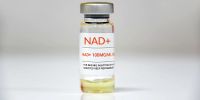
NAD+ — nicotinamide adenine dinucleotide — is a coenzyme present in every cell. It carries electrons through the reactions that release energy from food, and it is consumed as a substrate by enzymes involved in DNA repair and in cellular signalling. Tissue levels are reported to fall with age, and that observation is what the commercial interest in supplying it rests on. It is given as an intramuscular injection: into a muscle, over about five minutes, typically once a week.
What it is
-
A coenzyme, not a vitamin or a drug
NAD+ shuttles electrons in the reactions that convert food into usable energy. Every cell makes its own, from vitamin B3 and from salvage pathways that recycle it.
-
Its second job
It is consumed as a substrate by sirtuins and PARP enzymes, which are involved in DNA repair and in switching genes on and off. This is the part of the biology that the ageing claims are built on.
-
Precursors
Niacin, nicotinamide riboside (NR) and nicotinamide mononucleotide (NMN) are precursors taken by mouth. Supplementing them does raise measurable NAD+ metabolites in blood — which is a finding about blood levels rather than about how anybody feels.
-
Why intramuscular here
Given as an infusion, NAD+ is run over one to several hours, and running it faster commonly causes chest tightness, nausea and cramping. An intramuscular injection delivers a smaller dose in about five minutes and avoids that.
What human research has shown
This is an active research area with a great deal of laboratory work behind it and comparatively little in people.
-
Laboratory and animal work
Raising NAD+ in cells and in animals affects metabolism, mitochondrial function and measures of ageing.
-
Human trials are in progress
Studies in people have mostly measured whether blood levels rise and whether the preparation is tolerated. Some early trials show that raising NAD+ improves energy, cognition, athletic recovery or may have anti-ageing effects.
-
There is no approved indication
NAD+ is not yet an approved medicine for any of the uses it is marketed for. It is supplied as a compounded preparation.
Risks and who should avoid it
-
At the injection site
NAD+ injections are noticeably more uncomfortable than most intramuscular injections — stinging during, and aching at the site for a day or two, are common.
-
Systemic effects
Flushing, nausea, abdominal cramping, headache and a racing heartbeat are reported, and are dose-related. They are the same effects that limit how fast an infusion can be run.
-
When it is not given
Pregnancy and breastfeeding, and an active cancer diagnosis without oncology input — because the pathways NAD+ feeds are involved in cell growth and repair, and the interaction is not understood well enough to assume it is neutral.
Common questions
Is this the same as an NAD+ drip?
No. A drip delivers a larger dose over one to several hours and is frequently uncomfortable. This is a smaller dose into a muscle over about five minutes.
Why weekly?
No interval has been established by trial, and injection schedules and protocl may differ by individual. Feel free to discuss with your provider.
A wellness service provided under physician supervision. It is not intended to diagnose, treat, cure or prevent any disease. Whether any of it is appropriate for you is decided after an examination — call (201) 408-5151 to ask.
Schedule an appointment
Dr. Yoo Rehab Clinic welcomes new patients from across Northern New Jersey and New York City, including Englewood, Teaneck, Fort Lee, Palisades Park and Ridgefield. Call today to learn more about insurance, scheduling, and how we can help.