

Rehabilitation
Physical and exercise therapy
Physical therapy is the treatment of movement problems through exercise, manual techniques and education. For most musculoskeletal conditions it is the first-line treatment and the one with the strongest evidence behind it — not because it is the gentlest option, but because loading tissue in a controlled way is what makes it adapt. Injections and surgery change the conditions under which tissue can recover; exercise is usually what does the recovering.
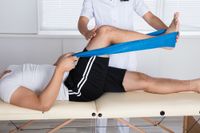
What a course involves
Programmes differ by condition, but the structure is broadly consistent.
-
Assessment
Movement, strength, range and the specific tasks a person cannot currently do. This establishes the starting point and what the programme is aiming at.
-
Prescribed exercise
The core of treatment. Exercises are selected for the tissue and the stage, and progressed as tolerance improves — progression is what distinguishes therapy from a fixed set of stretches.
-
Manual therapy
Hands-on techniques used to reduce pain and improve mobility. Evidence generally supports it as an adjunct that makes exercise possible rather than as a treatment on its own.
-
Education and self-management
What to expect, which activities to modify and which to resume, and a home programme. Adherence to the home programme is among the strongest predictors of outcome.
What the evidence supports
Exercise therapy appears in first-line recommendations across most major musculoskeletal guidelines.
-
Spinal pain
Exercise is recommended for persistent low back and neck pain, both for symptom control and for reducing recurrence.
-
Osteoarthritis
Core treatment for knee and hip osteoarthritis in every major guideline, alongside weight management where relevant.
-
Tendinopathy
Progressive loading is the best-supported treatment for tendon problems, and passive treatments alone generally underperform it.
-
After injury or surgery
Structured rehabilitation determines much of the eventual outcome after ligament injury, fracture and joint replacement.
What to expect
The commonest reasons a course does not help are expectations that were never set.
-
It takes weeks, not days
Tissue adaptation is measured in weeks to months. Programmes are generally reviewed at intervals rather than judged after one or two sessions.
-
Some discomfort is acceptable
Mild symptom increase during and after exercise is common and does not indicate harm. What is monitored is whether symptoms settle within about a day.
-
The home programme is the treatment
Supervised sessions are a small proportion of total exercise time. Most of the effect comes from what is done between them.
Common questions
Will it hurt?
Some increase in symptoms during or after exercise is normal and is not a sign of damage. Pain that is severe, or that is still elevated the next day, is a reason to adjust the programme rather than to stop.
How many sessions are needed?
It varies with the condition and the goal. Many musculoskeletal problems are managed over a few weeks of supervised sessions supporting a longer home programme.
Can I just do exercises from the internet?
Generic programmes help some people. The value of assessment is in selecting the right exercises for the stage, progressing them appropriately, and identifying when symptoms indicate something other than what was assumed.
Is it better than an injection?
They answer different questions. Injections can reduce pain that is preventing movement; exercise is what restores capacity. For most conditions the evidence favours exercise as the primary treatment.
General reference information, and not advice about your own case. It may not reflect the most recent guidance or what is offered on a given day — call (201) 408-5151 to check.
Schedule an appointment
Dr. Yoo Rehab Clinic welcomes new patients from across Northern New Jersey and New York City, including Englewood, Teaneck, Fort Lee, Palisades Park and Ridgefield. Call today to learn more about insurance, scheduling, and how we can help.