

Neck and back
Facet joint pain
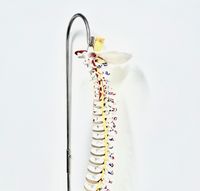
The facet joints are small paired joints at the back of the spine, one on each side of every level, which guide and limit movement between the vertebrae. Like any synovial joint they can become arthritic or inflamed, and when they do they produce pain that is typically felt in the neck or back and may refer into the shoulder, buttock or thigh — but not usually below the knee or elbow, which helps distinguish it from nerve root pain.
Symptoms
The pattern is mechanical: it varies with the positions that load the joints.
-
Worse on extension and rotation
Leaning backwards, looking up, or turning toward the painful side typically aggravates it; bending forward often relieves it.
-
Pain near the midline, referring locally
Usually felt beside the spine rather than in the midline itself, and referring into the shoulder blade, buttock or thigh in recognisable patterns.
-
Morning stiffness that eases with movement
Common after periods of inactivity, easing over the first part of the day.
-
No neurological deficit
Facet pain does not cause the numbness, weakness or reflex loss of a nerve root problem, though the two can coexist.
Causes
Facet joints are loaded every time the spine moves, and they degenerate for the same reasons other joints do.
-
Degenerative change
Cartilage loss and osteoarthritis within the joint, increasing with age and often alongside disc degeneration at the same level.
-
Injury
Facet joints are frequently implicated in neck pain that persists after a whiplash injury, and can be injured by extension and rotation forces.
-
Segmental overload
Where one level takes more load than it should — after a fusion, or with a spondylolisthesis — the facets at that level are affected.
Diagnosis
Facet joint pain is difficult to confirm on examination or imaging alone, which is why diagnostic blocks are used.
-
The limits of imaging
Facet arthritis is visible on CT and MRI in a large proportion of people without back pain, so the finding alone does not establish the source.
-
Clinical assessment
The history and examination generate a suspicion, based on the pattern of aggravating positions and the absence of neurological signs.
-
Diagnostic block
Anaesthetic placed around the small nerves that supply a facet joint tests the hypothesis directly: if the pain subsides while the block is active, that joint is implicated. It is the reference standard for this diagnosis.
Common questions
How is it different from a disc problem?
Disc-related root pain usually travels into the limb past the knee or elbow and can cause numbness or weakness. Facet pain stays closer to the spine, refers only into the proximal limb, and does not produce neurological deficit.
Why do I need an injection to diagnose it?
Because imaging cannot distinguish a painful facet joint from an arthritic but painless one. Temporarily anaesthetising the nerves that supply the joint is the only direct test available.
Is facet arthritis serious?
It is a common degenerative change rather than a dangerous condition, and many people who have it on imaging have no symptoms. Treatment is directed at pain and function.
What if a diagnostic block does not help?
That is a useful result: it makes the facet joint an unlikely source and redirects the assessment elsewhere.
General reference information, and not advice about your own case. It may not reflect the most recent guidance or what is offered on a given day — call (201) 408-5151 to check.
Schedule an appointment
Dr. Yoo Rehab Clinic welcomes new patients from across Northern New Jersey and New York City, including Englewood, Teaneck, Fort Lee, Palisades Park and Ridgefield. Call today to learn more about insurance, scheduling, and how we can help.